

Introduction: Exploring Two Countries on Your Own Terms
Rwanda and Uganda are neighbors, and together they form one of Africa’s most rewarding travel pairings. In a single journey you can trek mountain gorillas, watch lions and elephants on safari, cruise beside crater lakes and wander through lively city markets. The easiest way to link these experiences is by road.
Car rental Rwanda & Uganda gives you flexibility that fixed tours rarely match. You choose when to leave, where to stop and how long to stay. This guide explains the rental options, the vehicles that suit each route, the documents you need and the practical points that make the difference between a smooth trip and a stressful one.
Why Rent a Car in Rwanda and Uganda?
Public transport exists in both countries, but it rarely reaches national parks, remote lodges or scenic back roads. Renting a vehicle offers clear advantages:
- Freedom: Set your own schedule and change plans when you want.
- Access: Reach trailheads, viewpoints and rural communities that buses skip.
- Comfort: Travel with your luggage, camera gear and companions in one vehicle.
- Value for groups: Sharing one vehicle between several travelers is often more economical than booking separate transfers.
Self-Drive or Car with a Driver?
Most rental companies in both countries offer two main options.
Self-drive rental suits confident, experienced drivers who want total independence. You handle navigation, fuel, parking and any roadside issues.
Chauffeur-driven rental includes a local driver who knows the roads, the traffic habits and the best stops. Many drivers also act as informal guides, which is a real advantage on long or complicated routes.
Uganda in particular can be demanding for visitors, with heavy traffic in Kampala, boda-boda motorbike taxis, trucks and variable road quality. Many first-time travelers choose a driver for Uganda and self-drive in Rwanda, where roads are generally more orderly.
Driving Sides: A Key Difference
This surprises many visitors. Rwanda drives on the right-hand side, while Uganda drives on the left. If you cross the border, you switch sides. Take it slowly at first, especially at roundabouts, junctions and when overtaking. Anyone uncomfortable with the switch should consider using separate vehicles in each country or hiring a driver for one of them.
Choosing the Right Vehicle
The best vehicle depends on your itinerary, group size and the season.
| Vehicle type | Best for | Notes |
| Compact saloon or hatchback | City driving, main paved roads | Economical, but unsuited to rough park roads |
| Compact SUV (RAV4 type) | Couples, highways, light gravel | Good balance of cost and comfort |
| Mid-size 4×4 (Prado type) | Families, mixed terrain | Strong all-rounder for most itineraries |
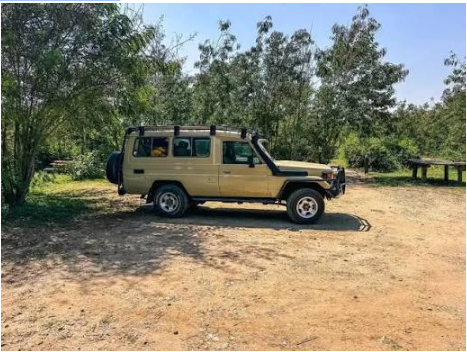
| Safari Land Cruiser | Groups, parks, rough tracks | Roomy, rugged, often with a pop-up roof |
| Double-cab pickup | Camping and luggage-heavy trips | Practical and tough |
| Minivan or Coaster | Large groups | Comfortable for longer paved routes |
If your route includes Akagera, Volcanoes, Bwindi, Queen Elizabeth or Murchison Falls, a 4×4 is strongly recommended. In the rainy seasons it is close to essential.
Documents You Will Need
Requirements can change, so always confirm the latest details with your rental company and the relevant authorities. In general, plan to carry:
- Passport and the correct visa or entry authorization for each country
- Valid driving licence from your home country
- International Driving Permit, strongly recommended and sometimes requested by rental companies or police
- Credit card or deposit for the security hold
- Rental agreement, vehicle registration and proof of insurance, kept in the vehicle at all times
Visitors can usually drive on a foreign licence for a limited time, though the conditions differ between the two countries.
Crossing the Border in a Rental Car
Travelers often assume cross-border rental is automatic. It is not. Many companies prohibit it, and those that allow it set specific requirements.
- Get written permission from the rental company before booking.
- Obtain the authorization letter and vehicle documents needed at customs.
- Confirm insurance is valid in both countries, and ask about regional cover.
- Expect extra fees, which may include a cross-border charge and temporary import paperwork.
- Allow time. Border posts such as Gatuna (Katuna) can be quick or slow depending on traffic.
A practical alternative is to rent separately in each country. Drive in Rwanda, cross the border by shuttle or bus, and collect a second vehicle in Uganda. This avoids the paperwork and the driving-side switch, though it needs extra coordination.
What to Check Before You Book
Choosing a reliable company matters more than finding the lowest price. Review these points:
- Vehicle condition: Ask for recent photos, check tyre tread and confirm there is a full-size spare, jack and tools.
- Insurance: Clarify what is covered, including collision, theft, third-party liability, tyres and windscreen, and know the excess you would pay.
- Mileage policy: Daily kilometer caps can add costs on long routes.
- Fuel policy: Confirm whether you return the car full and what fuel is included in driver packages.
- Breakdown support: Ask who to call and how fast a replacement vehicle can reach you.
- Transparent pricing: Request a written, all-inclusive quote showing daily rate, taxes, driver fees, deposit and extras.
- Reviews and reputation: Look for recent, detailed customer feedback and check that the company is properly registered.
Understanding Rental Costs
Rates vary by vehicle type, season, rental length, driver inclusion and booking date. As a general principle, a safari 4×4 costs more than a compact SUV, and chauffeured packages cost more than self-drive. Peak seasons, usually the drier months, are pricier and book out sooner.
Budget beyond the daily rate. Consider fuel, insurance upgrades, cross-border fees, driver accommodation and meals, parking, park entry vehicle fees and the security deposit. A slightly higher rate that includes insurance, generous mileage and breakdown support is often better value than a cheap headline price with costly extras.
Popular Routes by Rental Car
Kigali to Volcanoes National Park. A scenic, largely paved drive, ideal for gorilla trekking itineraries.
Kigali to Akagera National Park. Good approach roads followed by unpaved game-drive tracks suited to 4x4s.
Kigali to Kampala via Gatuna. The classic cross-border corridor, with heavy truck traffic on the Ugandan side.
Kampala to Bwindi Impenetrable Forest. A long journey, usually split over two days, with steep and sometimes rough final stretches.
Kampala to Queen Elizabeth National Park. Open savanna, wildlife and the equator crossing along the way.
Kampala to Murchison Falls National Park. A longer, more remote route where ground clearance pays off.
Allow more time than navigation apps suggest. Hills, villages, trucks and road works lower average speeds in both countries.
Safety and Driving Tips
- Avoid driving after dark. Poor visibility, pedestrians, animals and unlit vehicles make night driving the biggest single risk.
- Watch for motorbikes. Boda-bodas and moto-taxis stop and turn unpredictably, so keep a generous following distance.
- Respect speed limits. Enforcement, including cameras and police checks, is real in both countries.
- Fill up early. Refuel in larger towns before heading to remote areas.
- Download offline maps, and carry a power bank, since coverage can drop in forests and valleys.
- Carry water, a torch and a first-aid kit, and check that the spare tyre and jack actually work.
- Keep emergency numbers handy, including your rental company’s breakdown line.
Best Time to Rent
Both countries have two rainy and two drier seasons. The long rains typically run from around March to May, with shorter rains in roughly October and November. The drier months, roughly June to September and December to February, are generally easier for driving and wildlife viewing. Travel is possible year-round, and a 4×4 keeps you flexible when roads turn muddy.
Conclusion
Car rental Rwanda & Uganda is one of the best ways to experience East Africa at your own pace. Rwanda offers orderly roads that suit first-time self-drivers, while Uganda adds livelier traffic and more remote park routes that reward preparation or a local driver. The essentials are simple: pick a vehicle suited to your terrain, confirm insurance and mileage terms, understand the switch from right-hand to left-hand traffic and secure written permission if you plan to cross the border.
Book early for peak seasons, avoid night driving, build generous time into every leg and choose a reputable company with clear pricing and reliable breakdown support. With those foundations in place, your journey between these two neighboring countries can become the highlight of your trip.
Key Takeaways
- Rwanda drives on the right, Uganda on the left, so plan for the switch at the border.
- Choose self-drive for independence or a chauffeur for local knowledge and less stress.
- A 4×4 is recommended for national parks, rural roads and rainy-season travel.
- Cross-border rental needs written permission, correct paperwork and valid insurance.
- Carry your passport, valid licence and, ideally, an International Driving Permit.
- Compare all-inclusive quotes, covering insurance, mileage, fuel and breakdown support.
- Avoid night driving and allow more time than maps suggest.
- Renting separately in each country can simplify paperwork and driving-side changes.
Frequently Asked Questions (FAQ)
Can I rent a car in Rwanda and drive it to Uganda?
Only if the rental company explicitly allows cross-border travel and provides the authorization documents and insurance. Always confirm this in writing before you book.
Which side of the road do they drive on?
Rwanda drives on the right, and Uganda drives on the left.
Do I need an International Driving Permit?
It is strongly recommended, and some companies or police may ask for it. Check current requirements with your rental provider.
Is it better to self-drive or hire a driver?
Self-drive suits confident drivers, especially in Rwanda. A driver is often more relaxed and practical in Uganda, where traffic and road conditions can be more demanding.
Do I need a 4×4?
Not for city driving or main paved highways. For national parks, rural lodges and wet-season travel, a 4×4 is much safer and more comfortable.
What is the best vehicle for gorilla trekking?
A mid-size 4×4 such as a Prado type offers a good balance of comfort, capability and luggage space for the mountainous regions in both countries.
How much does car rental cost?
Prices depend on the vehicle, season, rental length and whether a driver is included. Ask for a written all-inclusive quote to compare offers fairly.
What insurance should I have?
At minimum, collision damage and third-party liability. Confirm exactly what is covered, the excess you would pay and whether cover applies across borders.
When is the best time to rent?
The drier months, roughly June to September and December to February, offer easier driving, though rentals are available year-round.
How far ahead should I book?
For peak seasons, book several weeks to a few months in advance, particularly for popular 4×4 models and cross-border arrangements.